

¡El Tour
Budget Bicycle Tours in Mexico
www.BikeMexico.com
The Complete Archive · 2000–2020

Yucatan's Beaches and Ruins 2003
Season 2002–2003 · all tours that season
Cancun to colonial Mérida with lots of beaches, night life, Mayan ruins and past and present culture along the way. We start down the Mexican Caribbean coast, and then work our way inland and up to the gulf coast. We will also visit many cenotes, caves and charming little towns. This is a LITE difficulty tour. It can be linked with "The Other Yucatan" after it to make a 4½ week tour.
| Dates: | Wed. Jan. 15, 2003 to Wed. Jan. 29, 2003 (2 weeks - 10 cycling days) |
| Distances: | Average/day: 61km Maximum/day: 75-96km Total Approx: 606km |
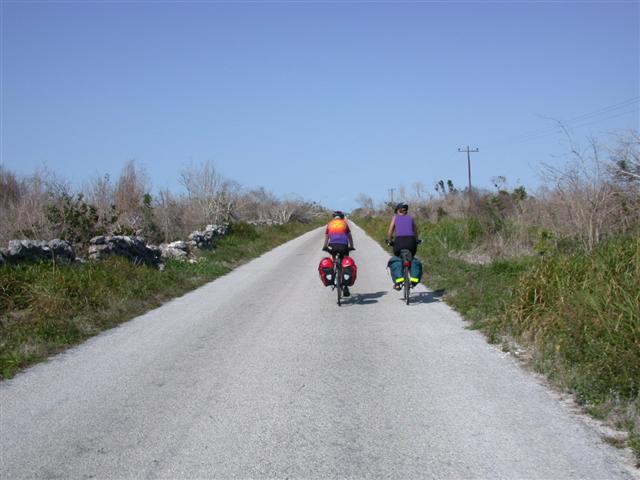
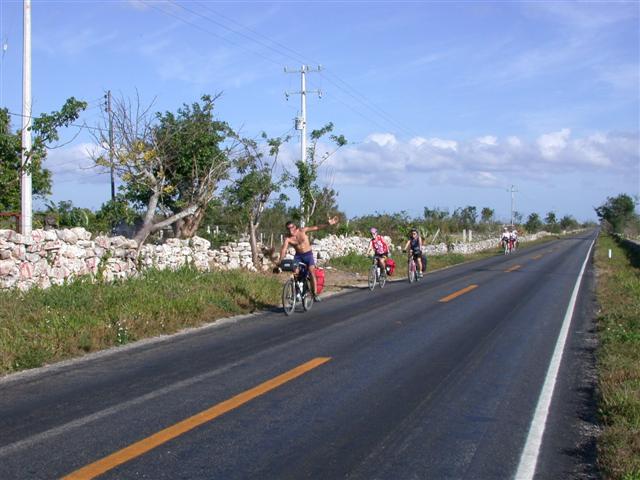
| Route Type: | LITELite DifficultyYou must have a basic level of fitness and at least aspire to be able to complete the distances in this tour (we know you can!). Distances average around 60 km, and are always less the 100 km per day. Roads are flat and generally not demanding.WeatherThe Weather: Yucatan PeninsulaThe Yucatan's best weather is during our winter months. From November till March the temperature hovers in the mid 20's to the mid 30's (celcius) with sunny clear skies. Humidity levels can be high as we head inland but a warm steady breeze and the occasional but rare tropical thunderstorm will keep you feeling refreshed.RoadThe Road: Yucatan PeninsulaThe Yucatan's roads are considered the finest in Mexico. They are generally in excellent condition with even, paved surfaces. Some stretches of our route also include a paved shoulder. The route meanders along flat terrain with the occasional rolling section. In most places traffic is light to non-existent. Depending on the time of day, roads may be busy near towns such as Cancun, Valladolid and Merida, however drivers are generally respectful of cyclists and will give you as much room as possible.LandThe Land: Yucatan PeninsulaThe Yucatan peninsula at the south eastern tip of Mexico is comprised of three states, Campeche, Yucatan, and Quintana Roo. The peninsula is a massive, flat carbonate - limestone shelf formed by prehistoric high sea levels. Too porous to support a river system, fresh water accumulates underground forming an extensive subterranean river network. Where the erosive process has broken through the earth's surface, cenotes (se-no-tes; limestone sinkholes or pools) have formed. Erosion has also formed numerous caves, some of them enormous and accessible to tourists. The peninsula's landscape is covered by thorn forest in the north and rain jungle in the south. |
| Highlights: | Real Mexican-Yucatecan culture. Small towns, ruins, cenotes, fishing villages, quiet roads, beaches. Mérida; bustling city, colonial architecture, art, food, market. |
The Route
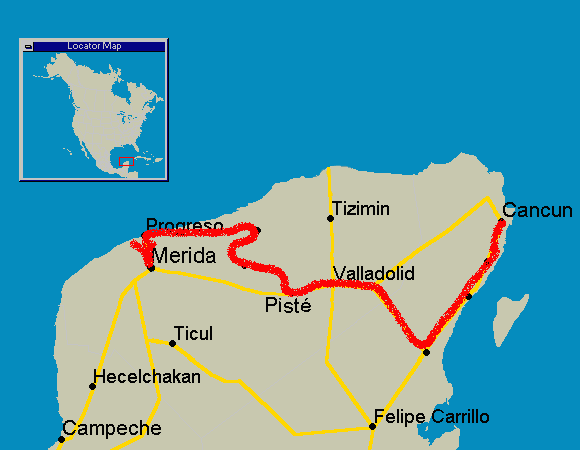
Itinerary
Click any day for the full description. Itineraries were always subject to minor changes.
WhenWhereDistanceHighlights
Day 0Meet in Cancun-
Hotel Zone (Beaches, Bars, Discos, Clubs), Mainland Town [more]
A fishing village of 120 people as recently as 1970, Cancun is today Mexico's biggest resort. There are in fact two distinct cities: the ZONA COMMERCIAL on the mainland - where the Mexicans live and the ZONA HOTELERA, an L-shaped island connected by bridges to the mainland - where the tourists live. Cancun island's magnificent, silky white beaches and warm turquoise waters are lined with huge, luxury hotels, flashy discos, and neon clad nightclubs and restaurants. This narrow strip of sandy land encloses a lagoon so that there is water on both sides. Once settled in to our hotel the evening can be spent relaxing on the mainland with the Mexicans, or enjoying the nightlife in the Hotel Zone.Day 1Cancun to Puerto Morelos53 km
Snorkeling, Scuba-Diving, Beach, Camping Possible [more]
This quiet, sleepy fishing village has lovely beaches and a reef that is only 600 meters offshore. It is generally only visited by those headed to Cozumel by car ferry.Day 2Puerto Morelos to Playa del Carmen37 km
Beach, Scuba-Diving, Snorkeling [more]
Playa del Carmen is a former, sleepy fishing village. Its beaches of silky white sand, the gentle surf, the coral reefs, and the startling emerald green waters make it the closest place to paradise on earth. Playa's narrow streets are clogged with young shoppers and backpackers. Predominantly from Italy, France and Germany, they have come to enjoy its beautiful beaches and its lively nightlife.Day 3Playa del Carmen to Tulum61-74 km
Cenotes, caves, beach, camping possible [more]
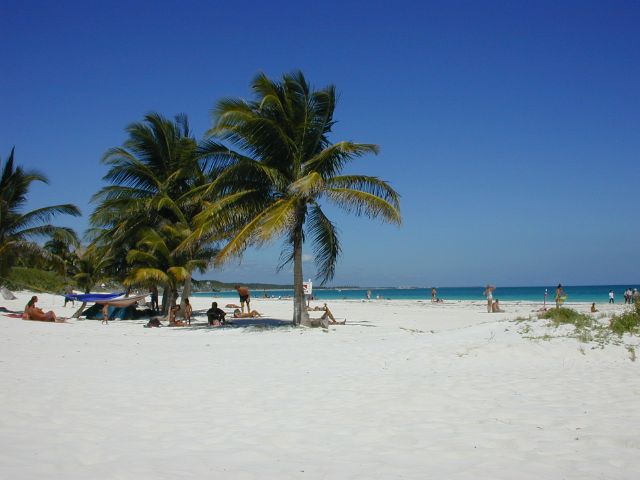
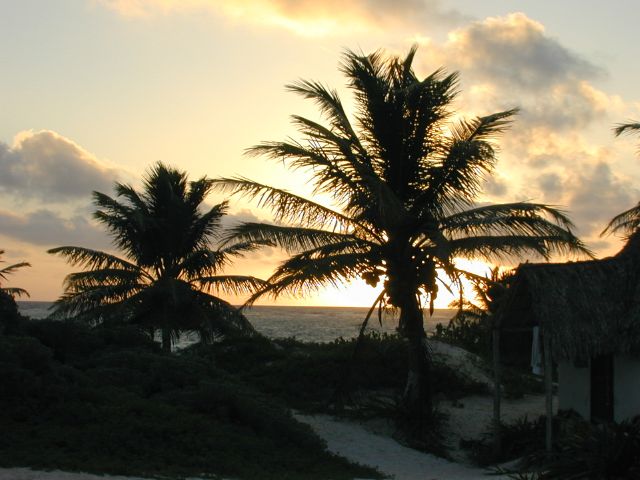
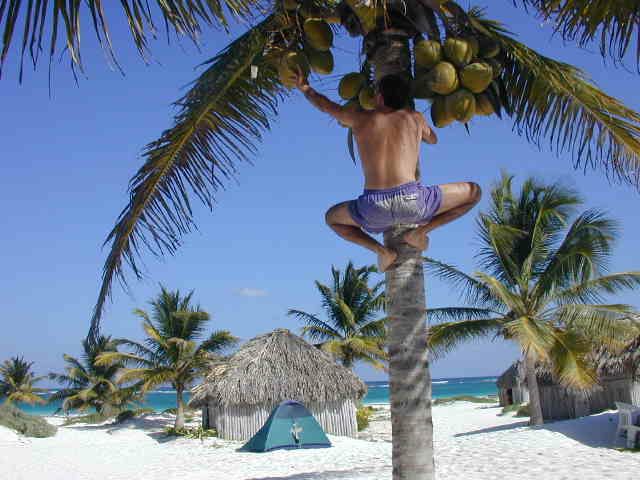
Today we have the opportunity to explore any of a number of enchanting cenotes including Dos Ojos, Cenote Azul and several more as well as the impressive Aktun Chen caves. In Tulum we get to enjoy the two aspects of the Yucatan that make it a special place to visit; its archaeological wonders and the Caribbean sea. Tulum was the oldest continuously inhabited city in the New World when the Spanish first discovered it. It was first settled in the 4th century AD. Today, international travelers and sun worshippers have invaded this ancient city. We will spend our nights in Tulum sleeping on the beach in a cabaña (a thatched roof hut) with the soothing sounds of the surf lulling us to sleep.Day 4Tulum-
After the ruins, why not go for a scuba dive or a snorkel, or perhaps you'd like to learn how to dive?
Beach, snorkel, Scuba-Diving, Tulum ruins, camping possible [more]
It's best to tour the ruins first thing in the morning before the tourists and the heat overwhelm. Its graying temples and watchtower rise above wind-bent palm trees clinging to a cliff overlooking the Caribbean Sea.After the ruins, why not go for a scuba dive or a snorkel, or perhaps you'd like to learn how to dive?
Day 5Tulum to Cobá55 km
Mayan Ruins, Cenotes, Quiet Small Town [more]
Deep in the jungle, Cobá is the site of an ancient Mayan city whose ruins (an estimated 6500 buildings) are for the most part still covered by dense jungle vegetation. Covering over 10 square kilometers, unexcavated remnants are beginning to emerge from countless hill-like mounds. To reach the only recently uncovered ruins, you will make your way along tunnel-like trails, through the dense jungle. Beautiful birds, spider monkeys rustling the tops of trees, lizards slithering out of your way, as well as fragrant plants and flowers will make your stay here unforgettable.Day 6Cobá to Valladolid62 km
Cenote Zací, Zocalo, Churches, Parks, Market [more]
Valladolid is one of the Yucatan's largest and most pleasing colonial cities. Rolling into town we will stop at the spectacular cenote Zací where we can take a dip to cool off. Its churches, parks, markets and beautiful zocalo are all worth a visit. To refuel for the next day's ride you can sample the Yucatan's delicious cuisine at one of Valladolid's many restaurants.Day 7Valladolid to Pisté (Chichén-Itzá)50 km
Cenote X-Kekén near Dzitnup, Balancanchen Caves [more]
A late start will allow us to enjoy Valladolid for a little longer and also to see the cenotes en route at their best. Cenotes X-Keken and Samula are a few kilometers west of town, near the village of Dzitnup. We will stop in for a refreshing dip in their cool, limpid waters. The Balancanchen Caves are about 6 km before Pisté. They are believed to have been a center for Maya-Toltec worship. The impressive stalactites and the ceramic religious offerings left behind by the Maya-Toltec civilization are definitely worth a visit.Day 8Pisté (Chichén-Itzá)-
Chichén-Itzá Ruins [more]
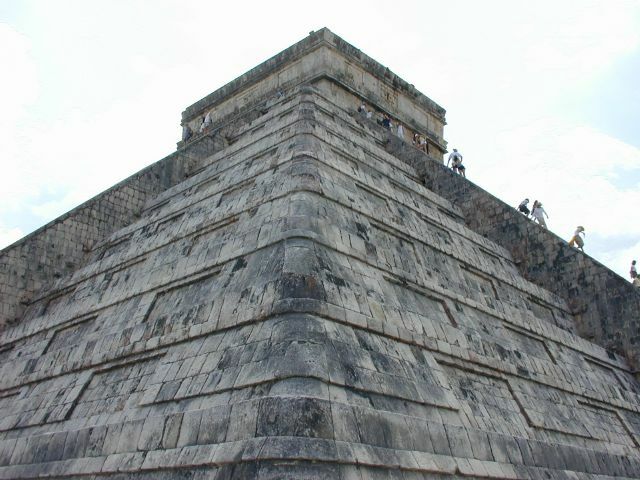
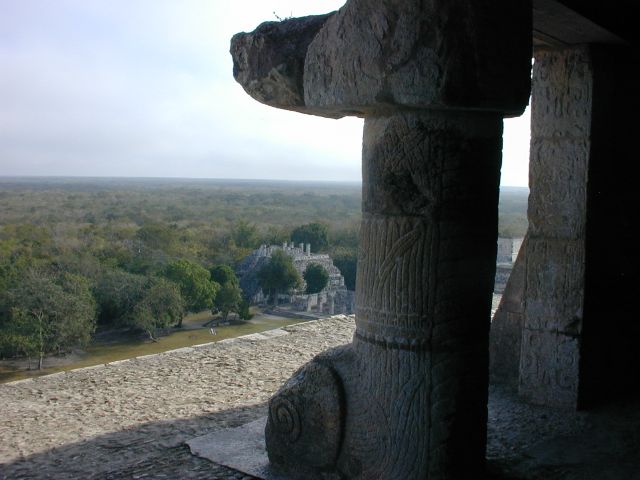
Chichén-Itzá is the Yucatan's premier cultural attraction.The history and the breathtaking beauty of this ancient Mayan site provides a dramatic window into the life and times of a Mayan civilization that was both intellectually advanced and brutally savage.Day 9Pisté to Izamal (via Dzitas, Tunkas and Stilpech)75-96 km
Cenotes, Mayan Ruins, Convent, Zocalo, Market [more]
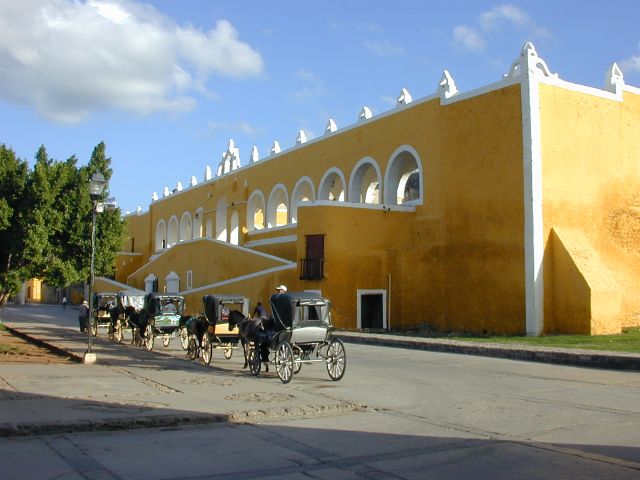
There are many cenotes and caves to visit along the way. Known as the Yellow Town because of the colour of the colonial buildings that line the zocalo, Izamal is famous for having the largest church plaza in Mexico. It includes an enormous Franciscan convent (built with Mayan stones) and the remnants of one of the tallest Mayan pyramids in the Yucatan. You can also visit the colourful market, a nearby cenote or just stroll around the beautiful zocalo observing the daily routines of the local inhabitants.Day 10Izamal to Dzintzantun~47 km
Small towns Yucatan, markets [more]
Heading northward from Izamal, the narrow paved road meanders through huge henequen plantations and cattle ranches.Day 11Dzintzantun to Progreso84 km
Mayan ruins, flamingos, Gulf Coast Road, Long Pier, Beaches, Restaurants, Shops and Market [more]
As you head west towards Progreso, the beautiful scenery will enchant you. We will stop at a minor Mayan ruin; Xcambo, then continue on to a Flamingo observation tower looking over the expansive wetlands. Progreso, a small, noisy fishing village at the end of the road, makes its fortune hauling in shrimp, red snapper, octopus, tuna and exporting henequen. Except for the summer months when it is overrun with Mexicans fleeing the heat and humidity of the Yucatan's interior, Progreso remains a tranquil and tourist free town. The long limestone shelf under its harbour and the resulting shallow waters have kept large cruise ships and tourists away. To increase Progreso's role as a shipping port and to attract cruise ships its 2km long pier (muelle) was recently extended to 7 km into the Gulf waters using a small island. The Gulf Coast's most popular beach requires you to walk out a great distance to reach shoulder deep water. Progreso is also located in the Chicxulub Crater. Many scientists believe that the meteor that struck the earth to form this huge (180km in diameter and 1100m in depth) crater led to the extinction of the dinosaurs.Day 12Progreso to Mérida via Chicxulub, Dzibilchaltun.65 km
Mayan ruins, cenote, Colonial Center, Zocalo, Market [more]
We&#ll take the backroads way into Mérida, passing through several little towns and visiting the Mayan ruins of Dzibilchaltun with it's most unusual and interesting cenote, Xlacah Cenote.Day 13Mérida-
Colonial Center, Zocalo, Market [more]
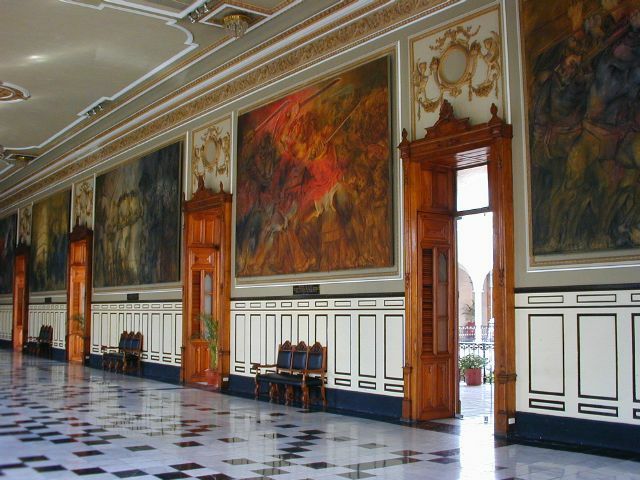
Mérida, is a state capital and commercial center. It's also the cultural focal point of the entire peninsula. For a large city it remains hospitable and friendly. Tourists are attracted by the history and beauty of this vibrant city. It's colonial center, Centro Colonial, is busy with Maya men and women in traditional dress. College students lounge at nearby cafes. Business men and women can be seen rushing to their offices and young backpackers trudging along to one of the cities many points of interest. Meridians can also be seen enjoying long, leisurely promenades in the zocalo (main square). The zocalo's clock tower chimes 4 times an hour. Dawn and dusk are greeted by a flag ceremony, accompanied by the music of a military band. Nearby you will be able to visit venerable old churches like the yellow cathedral with its twin towers containing what is claimed to be the second largest crucifix in the world. There is also the Palacio de Gobierno with its stairway painting depicting the Maya belief that humanity comes from maize. Under the balcony of the Palacio Municipal concerts and classes in jarana, a Yucatan colonial dance, take place. The nearby market or Mercado is huge, noisy, colourful and crowded. Anything you might want to buy can be found there or even made for you while you wait. Of special interest are the famous Yucatan hammocks. There are numerous museums and parks to visit as well as a never-ending series of free music and dance events to attend each day of the week.Day 14Mérida to Cancun-
Relax on the bus back to Cancun [more]
On the final day, we will leave early in the morning on one of MexicoIt's safe and comfortable deluxe buses and return to Cancun.What it cost that season
| Guides' Fee | + Accommodations | + Food & Drink | + Misc. | = Approx. Total Land Cost |
|---|---|---|---|---|
| $400 | $115 | $170 | $150 | $835 |
All figures in US dollars, as published at the time. Riders paid their own accommodation, food and entrance fees on the road — the Guides' Fee was the only charge from ¡El Tour. Full history: price of Yucatan's Beaches & Ruins through the years.
Photo Album








This tour in other seasons: 2005–2006